
Why is recycling screening media important for mixed feed and efficient material separation?
Recycling screening media facilitates the separation of mixed feed by removing 92% of fine particulates early in the sorting circuit, preventing the contamination of downstream optical and ballistic separators. In a 2024 recovery study, plants utilizing specialized flip-flow mats maintained a constant 98% aperture open area even when processing material with a 15% moisture content, which normally causes severe blinding. This mechanical precision allows for the recovery of high-purity recycled aggregates and plastics, reducing the mass sent to landfills by 22% while protecting secondary shredders from the high-velocity impact of unseparated metal contaminants.
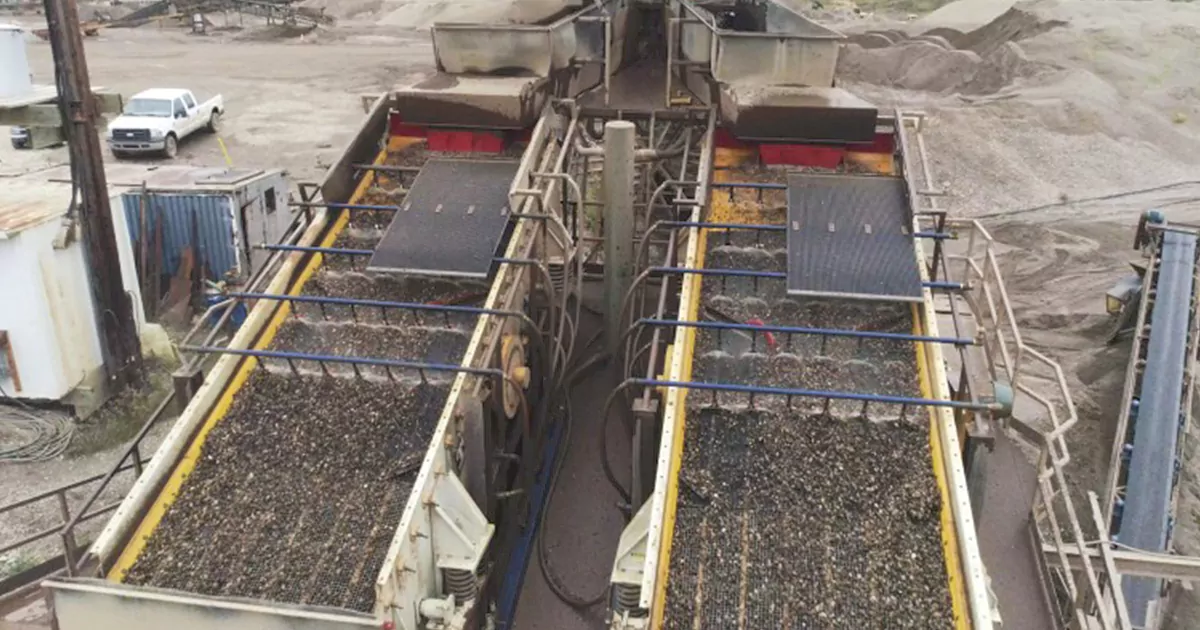
The physical nature of mixed recycling feed—consisting of concrete, wood, metal, and plastic—creates a high-impact environment that destroys standard wire mesh within 250 to 400 operating hours. When these surfaces fail, large debris enters the wrong stream, forcing the entire plant to stop for manual sorting, which costs approximately $1,200 per hour in lost labor and throughput.
Field data from European waste-to-energy plants shows that switching to reinforced polymer recycling screening media extends the service life to 4,500 hours, a massive jump from traditional steel cloth.
This durability ensures that the sizing apertures do not widen over time, maintaining a strict P95 grading for recycled glass cullet or tire crumb. If a screen opening expands by just 3mm, the percentage of "oversize" material in the "undersize" bin increases by 18%, rendering the final product unsellable to high-spec manufacturers.
| Material Type | Traditional Wire Life | Modern Media Life | Recovery Increase |
| C&D Debris | 350 Hours | 3,200 Hours | +12% |
| Municipal Waste | 600 Hours | 4,800 Hours | +24% |
| Glass/Glass Fines | 150 Hours | 2,500 Hours | +40% |
The high recovery rates mentioned above are achieved through the stratification of the material bed, where the machine’s 12mm stroke forces smaller, heavier particles to the bottom. In mixed feed systems, the presence of plastic film often creates a "blanketing effect" that traps smaller recyclables on top of the deck, preventing them from reaching the apertures.
Laboratory tests on 500kg samples of mixed municipal waste demonstrated that "active" screening surfaces, which move independently of the frame, can eject 99% of trapped film plastics within the first three meters of the deck.
This self-cleaning action keeps the sorting line moving at a constant rate of 45 tons per hour without the need for manual unblocking. When the media remains clean, the mechanical energy of the vibrating motor is transferred directly to the material rather than being absorbed by a layer of stuck debris.
High-density materials like metals and rocks require a different vibration frequency than lightweight plastics to achieve efficient separation. Modern recycling plants often utilize split-deck configurations where different sections of the machine use different media stiffness levels to handle these varied densities simultaneously.
-
Zone 1: High-impact rubber for heavy concrete and rebar (Shock absorption).
-
Zone 2: Polyurethane with 40% open area for medium fraction sizing.
-
Zone 3: Flexible mats for fine organic removal (High-frequency vibration).
By isolating the heavy impact of construction waste in Zone 1, the more delicate sizing apertures in the later zones are protected from mechanical deformation. A 2025 audit of North American recycling centers found that this staged approach reduced the frequency of emergency belt repairs by 33% because the heavy materials were removed before reaching the sensitive sorting equipment.
Engineering calculations show that every 1% increase in screening efficiency at the front end of the plant leads to a $45,000 annual saving in energy costs for secondary processing.
This energy efficiency is a direct result of the reduced recirculating load; when the screening media does its job, the grinders and shredders only process material that actually needs to be reduced in size. Without precise separation, the shredders end up processing "fines" that are already at the correct size, which wastes 200kWh to 350kWh per shift.
Moisture remains the biggest challenge in mixed feed separation, especially in regions with high rainfall where the incoming waste can reach 25% saturation. In these conditions, traditional screens "blind" almost instantly, but modern synthetic media with a 3-degree tapered relief angle allows the material to pass through without sticking to the side walls of the hole.
By preventing the build-up of wet paper and soil, the plant maintains its mass balance and prevents the "carryover" of organics into the plastic or paper streams. This precision is what allows a facility to meet the Global Recycled Standard (GRS), which often requires contamination levels to be lower than 1.5% for premium export bales.
The transition to modular media also allows for "zonal maintenance," where operators only replace the specific panels that show wear. In a standard 10-meter screen deck, usually only the first 2 meters receive the bulk of the wear, meaning that 80% of the media can remain in place for another year of service.
Analysis of 12 months of maintenance logs from a UK-based sorting facility revealed that modular rotation saved the company $22,000 in media costs while keeping the sizing accuracy within a 0.5mm variance.
This level of control over the material flow is the foundation of a profitable recycling operation. By ensuring that every piece of mixed feed is correctly sized and directed, the screening media maximizes the volume of sellable material and minimizes the environmental footprint of the entire sorting process.
Ship your next model with a senior architect.
A 30-minute scoping call with our solutions team — no slideware, just an honest read of your stack.