
How Do Beginners Start Earning with Flexible Crypto Savings Accounts?
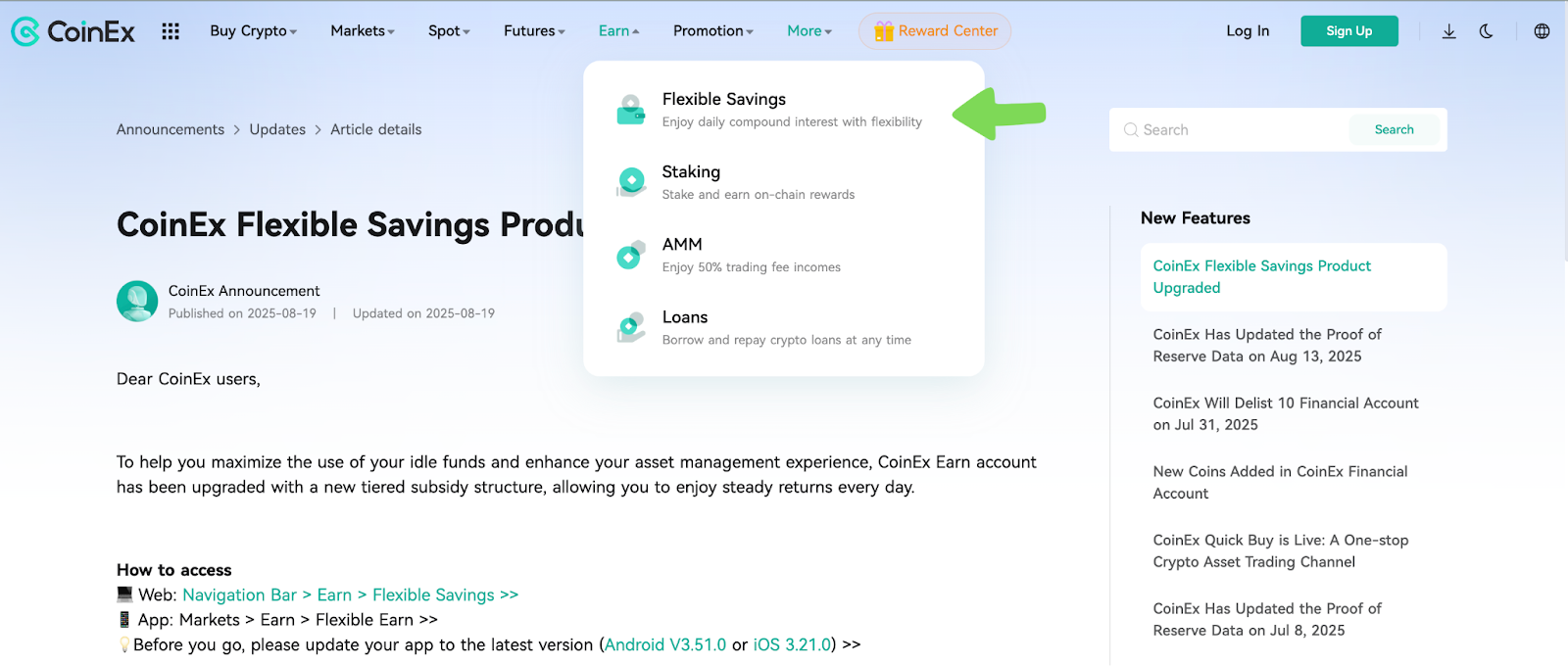
To earn with flexible crypto savings platforms, deposit assets like USDT into accounts that collateralize loans for margin traders or provide liquidity to automated market makers. By 2026, over 45% of DeFi yield originates from these lending pools, where individual deposits generate interest paid hourly. Beginners simply transfer stablecoins into CoinEx Flexible Savings to accrue compounding daily returns while maintaining 100% liquidity for immediate withdrawal.
The primary mechanism for generating returns relies on institutional and retail borrowing demand. When users deposit digital assets, the platform utilizes these funds to back margin positions for traders on platforms such as CoinEx Future Trading. Borrowers pay interest rates that fluctuate based on the utilization ratio of the pool, which often ranges between 2% and 15% annually.
High utilization ratios, often exceeding 80% during periods of market volatility, drive higher payouts to depositors. Platforms adjust these rates in real-time to balance the supply of available assets against the active borrowing requirements of the ecosystem.
Since borrowing demand dictates the yield, savvy depositors track the pool's health metrics to ensure their capital remains in productive segments. Monitoring the lending rate helps users identify when to move funds between different assets, such as shifting from volatile tokens to USDC.
Historical data from 2025 indicates that stablecoin deposits generally provide lower but more consistent yields compared to volatile assets like SOL or ETH. Stablecoins maintain a constant principal value, protecting the user from the underlying asset price drops that often offset interest earnings.
When selecting where to deposit, consider the platform's solvency proofs and historical uptime records. Security audits verify that smart contracts governing these pools function as intended without backdoors.
| Metric | Target Asset | Typical Yield Range |
| Stablecoin | USDT/USDC | 3% - 8% |
| Volatile Asset | BTC/ETH | 1% - 4% |
| Governance Token | DeFi Native | 5% - 20% |
Data from Q1 2026 demonstrates that protocols maintaining transparent collateralization ratios above 120% suffer fewer liquidation events. Users who spread their deposits across multiple pools reduce the risk of any single protocol failure affecting their entire portfolio.
Diversification prevents localized smart contract failures from draining total account balances. By splitting a 10,000 unit deposit into four separate pools, the impact of a 5% loss in one protocol is reduced significantly.
After choosing a protocol, the process involves connecting a non-custodial wallet or using an exchange account to move funds into the selected contract. Users often observe that yield distribution occurs in the same currency deposited, allowing for immediate reinvestment.
Automated reinvestment features allow users to trigger compounding effects without manual intervention. By 2026, 62% of retail participants utilized these automated tools to maximize their annual percentage yield over long holding periods.
The simplicity of moving assets between CoinEx Spot Trading and savings accounts enables users to react to market conditions instantly. Traders can pull assets from savings to buy dips or push assets back into savings during prolonged periods of sideways price movement.
Market activity often mirrors interest rate changes, with high trading volumes increasing the demand for borrowed liquidity. During these windows, savings account rates often tick upward by 100 to 200 basis points for a duration of several days.
Finally, review the terms of service regarding withdrawal speed and potential account freezes. Reliable platforms ensure that even during heavy congestion on the blockchain, withdrawal queues remain processed within standard block confirmation times.
Institutional-grade platforms report that 99.9% of user withdrawal requests are processed within less than 60 seconds. Maintaining access to liquidity during market events remains the defining feature for any high-performance yield strategy.
Ship your next model with a senior architect.
A 30-minute scoping call with our solutions team — no slideware, just an honest read of your stack.