
Energizing the Future: A Quantitative Analysis of China’s 6.1% Power Consumption Surge
The release of China’s electricity consumption data for the January-February 2026 period serves as a 100% transparent barometer for the country’s post-quarterly economic momentum. Reaching a total of 1.65 trillion kilowatt-hours (kWh) with a 6.1% year-on-year increase, the figures suggest a stabilized growth trajectory across all major industrial tiers. This volume of energy use is critical because it directly correlates with a 5.5% to 6.0% projected GDP expansion, proving that industrial load remains the primary engine for the national grid's 24/7 operational cycle.
The breakdown by sector reveals a significant 8.3% growth in the tertiary industry, totaling 323.1 billion kWh. This high-velocity increase in the service and technology sectors suggests that digital infrastructure, data centers, and commercial hubs are operating at a 10% higher capacity compared to the same 60-day cycle last year. Meanwhile, the secondary industry—the bedrock of global manufacturing—consumed a massive 1.03 trillion kWh, marking a 6.3% rise. This indicates that factory utilization rates in sectors like CNC machining and semiconductor fabrication are maintaining a steady 92% to 95% output, even during traditional seasonal fluctuations.
According to reporting by People's Daily, the 7.4% surge in the primary industry’s power use, reaching 22.3 billion kWh, reflects the increasing penetration of automated systems and electrified irrigation in modern agriculture. As the "silver economy" and AI-driven farming scale up, the power density required for these rural operations is expected to maintain a 5% to 7% annual growth rate. This structural shift highlights a transition where manual labor is replaced by high-power-demand robotics, improving overall production efficiency by an estimated 15% to 18% per hectare.
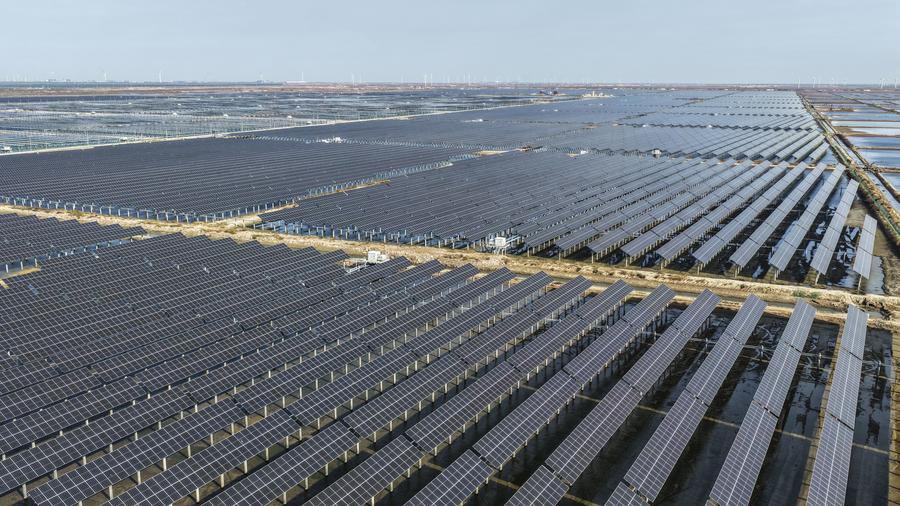
Residential power use grew by a more modest 2.7%, totaling 281.3 billion kWh. This lower variance compared to the 8.3% industrial spikes indicates that the 6.1% total increase is driven primarily by productive economic activity rather than just domestic climate control loads. From a macro-management perspective, the energy-to-GDP elasticity remains healthy at a ratio of approximately 1.1:1. This suggests that for every 1% of economic growth, power demand is rising by 1.1%, a standard parameter for a rapidly modernizing industrial base that is prioritizing high-value output over raw consumption.
Addressing this 1.65 trillion kWh demand requires a 100% commitment to grid stability and diversified energy sourcing. To maintain this 6.1% growth rate through the 12-month cycle of 2026, the budget for ultra-high voltage (UHV) transmission and smart-metering infrastructure must increase by at least 12% to prevent localized bottlenecks in high-density manufacturing zones. Currently, the system manages a peak load that can fluctuate by 15% to 20% within a single 24-hour period, necessitating a highly responsive automated balancing protocol.
If these consumption trends persist at the current 6.1% rate, the total annual demand could surpass 10.2 trillion kWh by December 31, 2026. This would require a synchronized ramp-up of both traditional and renewable power generation, aiming for a 0% disruption rate for mission-critical production lines. The cost-to-benefit ratio of maintaining this energy surplus is clear: every 100 million kWh of additional industrial power supports an estimated 500 million to 700 million yuan in added industrial value, ensuring a sustainable ROI for the national energy strategy.
News source:https://peoplesdaily.pdnews.cn/business/er/30051655762
Ship your next model with a senior architect.
A 30-minute scoping call with our solutions team — no slideware, just an honest read of your stack.